The History of The Order of Saint Queen Tamar
The Order of Saint Queen Tamar is a historic Georgian order of the Royal House of Georgia.
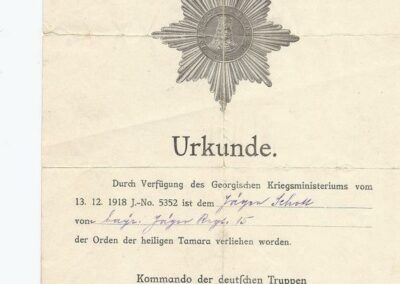
Its origins lie in Georgia’s struggle for national independence during the First World War. First established as the Insignia of Saint Queen Tamar by the Georgian Legion in 1915, it was formally recognized as an order of merit by the Democratic Republic of Georgia in 1918. Suppressed following the Soviet invasion and occupation of Georgia, it was restored under the Royal House in 1942 by His Royal Highness Prince Irakli Bagration of Mukhrani.
His Royal Highness Prince Davit Bagration of Mukhrani has served as Head of the Royal House of Georgia and Sovereign Grand Master of the Order of Saint Queen Tamar since 2008.
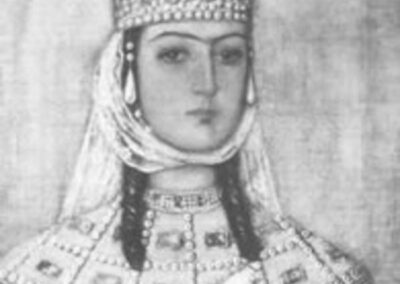
The Order bears the name of Saint Queen Tamar, one of the greatest and most revered sovereigns in Georgian history, under whose reign Georgia experienced its celebrated Golden Age.
Origins During the First World War
During the First World War, Georgian political leaders working in forced exile sought international support for the liberation of Georgia from the Russian Empire.
The Committee for the Independence of Georgia, also known as the Georgian National Committee, operated from Berlin under the leadership of prominent Georgian political and intellectual figures, including Prince Giorgi Machabeli and Mikheil Tsereteli.
With German support, the Committee helped organize the Georgian Legion in 1915. The Legion was composed of Georgian volunteers, refugees, and former prisoners of war and was intended to advance the cause of Georgian independence and encourage resistance to Russian imperial rule in the Caucasus.
The Legion’s strength varied over time but exceeded one thousand men. Lieutenant Horst Schliephack served as its first commander, while Leo Kereselidze was its highest-ranking Georgian officer and one of the leading military figures associated with the Georgian independence movement.
The Insignia of Saint Queen Tamar
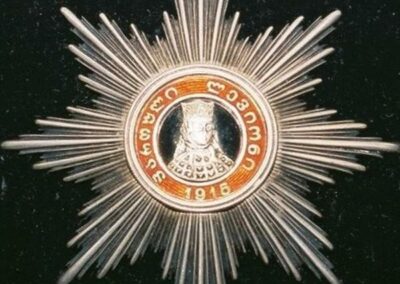
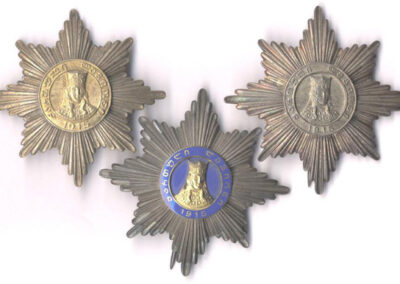
Later in 1915, the Georgian Legion established the Insignia of Saint Queen Tamar to recognize extraordinary service to the cause of Georgian independence.
The distinction was conferred in civil and military forms. Its design is attributed to Lieutenant Horst Schliephack, and its ribbon incorporated red and black, colors then associated with the Georgian national movement.
By placing the distinction under the name and image of Saint Queen Tamar, its founders connected the modern struggle for independence with Georgian sovereignty, national unity, Christian heritage, and cultural achievement.
Recognition by the Democratic Republic of Georgia
Georgia declared its independence on 26 May 1918, establishing the Democratic Republic of Georgia after more than a century of Russian imperial rule.
In 1918, the Georgian government formally recognized the Insignia of Saint Queen Tamar as an order of merit. It thus became an official distinction of the newly independent Georgian state while retaining its historical connection to the Georgian Legion.
It recognized Georgians and foreign supporters who had rendered distinguished military, political, diplomatic, or other service to Georgia and its national cause.
Suppression Following the Soviet Occupation
The independence of the Democratic Republic of Georgia was brought to an end by the Soviet Russian invasion of February 1921 and the subsequent occupation of the country.
Following the establishment of Soviet rule, the institutions, decorations, and national symbols of independent Georgia were suppressed. Many Georgian political, military, intellectual, religious, and cultural leaders were executed, imprisoned, persecuted, or forced into exile.
The Order of Saint Queen Tamar could no longer operate openly within Georgia. Its memory and national significance nevertheless survived among Georgians in forced exile and among those who continued to work for the restoration of Georgian independence.
Restoration by Prince Irakli Bagration of Mukhrani
In 1942, the Union of Traditionalist Georgians petitioned His Royal Highness Prince Irakli Bagration of Mukhrani to restore the Order.
Prince Irakli restored the Order under the authority of the Royal House with the consent of his father, His Royal Highness Prince Giorgi Bagration of Mukhrani, then Head of the Royal House of Georgia and regarded by the Royal House as de jure King Giorgi XIII.
Prince Irakli assumed the Grand Mastership and preserved the Order’s distinctly Georgian national character. It continued to recognize extraordinary service to Georgia, the cause of national independence, the preservation and promotion of Georgian history and culture, and the restoration of the country’s legitimate national and monarchical institutions.
During Prince Irakli’s Grand Mastership, the Order was conferred selectively upon Georgians living in forced exile, foreign supporters of the Georgian cause, and members of European royal and imperial houses.
Notable recipients included:
- Grand Duke Vladimir Kirillovich, Head of the Imperial House of Russia
- Francisco de Borbón y de Borbón, Duke of Seville and Head of the House of Bourbon-Seville
- Distinguished Georgian political, military, intellectual, and cultural figures who had been forced into exile following the Soviet occupation
Through these appointments, the Order helped preserve international awareness of Georgia’s history, culture, national identity, and continuing aspiration for independence.
The Grand Mastership of Prince Giorgi
Upon the death of Prince Irakli in 1977, his son, His Royal Highness Prince Giorgi Bagration of Mukhrani, succeeded him as Head of the Royal House of Georgia and Grand Master of the Order.
For reasons of discretion and dynastic policy, Prince Giorgi chose not to make further regular appointments to the Order. It therefore remained largely inactive during his Grand Mastership.
This period of inactivity did not abolish the Order or interrupt its dynastic continuity. The Grand Mastership remained attached to the Headship of the Royal House of Georgia.
The Sovereign Grand Mastership of Prince Davit
Prince Giorgi died in Tbilisi on 16 January 2008 and was succeeded by his son, His Royal Highness Prince Davit Bagration of Mukhrani.
Since 2008, Prince Davit has served as Head of the Royal House of Georgia and Sovereign Grand Master of the Order of Saint Queen Tamar.
Under his authority, the Order was restored to active use within the chivalric system of the Royal House. Prince Davit issued a new Constitutional Letter, renewed appointments, and integrated the Order into the contemporary structure and government of the Royal Orders of Georgia.
The Order continues to preserve its historical connection with Georgia’s struggle for independence while recognizing extraordinary service to Georgia, its people, its history, its culture, its national identity, and the Royal House.
On 15 April 2025, Prince Davit issued an authoritative framework defining and affirming the privileges, dignities, ceremonial precedence, and hereditary character of the Grand Collar, the highest and most solemn grade of the Order.
Saint Queen Tamar and the Georgian Golden Age
The Order bears the name of Saint Queen Tamar, one of the greatest and most revered sovereigns in Georgian history.
Under her reign, Georgia experienced an extraordinary period of national strength, unity, prosperity, and cultural achievement that became known as the Georgian Golden Age.
Georgia’s territories and influence extended from the Black Sea to the Caspian Sea, while the country became one of the most important political and cultural powers of the region.
Saint Queen Tamar became an enduring symbol of Georgian sovereignty, national unity, Christian faith, wise government, and devotion to the Georgian people.
For these reasons, her name and image were chosen for the distinction established during Georgia’s twentieth-century struggle for national independence.
Historical Purpose and Continuing Character
The Order of Saint Queen Tamar preserves the national purpose that inspired its original establishment.
Historically, it has recognized extraordinary service connected with:
- Georgia and the Georgian people
- The independence, sovereignty, and national identity of Georgia
- The preservation and promotion of Georgian history and culture
- The historical greatness and traditions of the Georgian nation
- The Royal House of Georgia and the Georgian monarchical cause
- Distinguished civil, military, cultural, diplomatic, charitable, or humanitarian service
The Order of Saint Queen Tamar is separate from the Order of the Eagle of Georgia and the Seamless Tunic of Our Lord Jesus Christ. Each Order possesses its own history, identity, grades, decorations, and institutional purpose.
The Order is governed under the authority of the Head of the Royal House of Georgia in his capacity as Sovereign Grand Master.
Grades and Decorations
The Order of Saint Queen Tamar is conferred in four grades:
- Esquire
- Knight or Dame of the Grand Badge
- Senator of the Grand Badge
- Knight or Dame Grand Collar
The Grand Collar is the highest and most solemn grade of the Order. Holders of the Grand Collar rank immediately after Grand Collars of the Order of the Eagle of Georgia and the Seamless Tunic of Our Lord Jesus Christ.
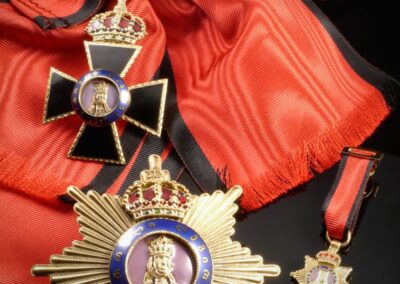
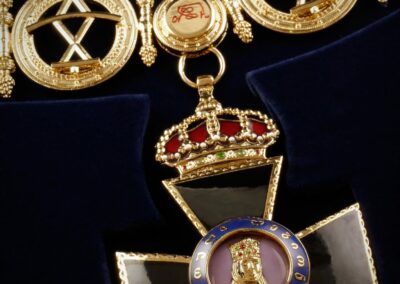
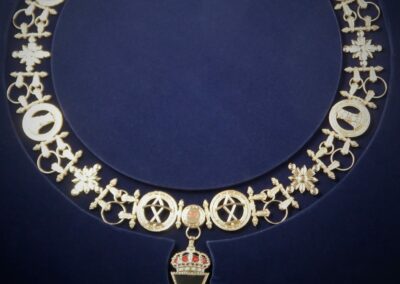
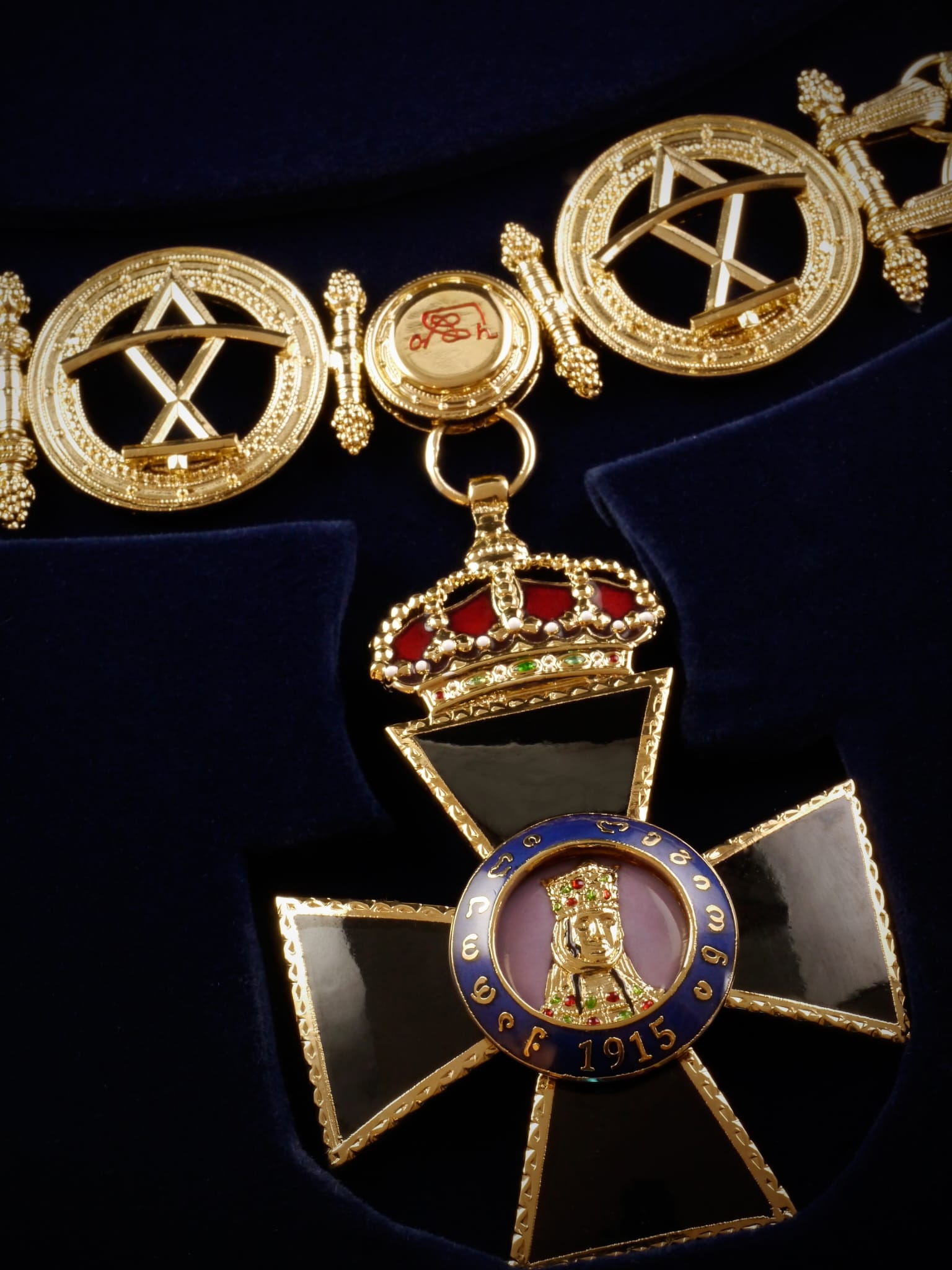
The principal decorations of the Order include the Silver Grand Badge, the Golden Grand Badge, and the Collar of the Order, together with the appropriate miniatures, bows, and other insignia prescribed for each grade.
View the grades and decorations of the Order of Saint Queen Tamar.
A National and Dynastic Institution
The history of the Order of Saint Queen Tamar extends across several distinct periods of Georgian history: the independence movement of the First World War, the Democratic Republic of Georgia, the Soviet invasion and occupation, the preservation of Georgian national institutions in forced exile, and the modern restoration of the Royal House within Georgia.
Its identity combines national remembrance with dynastic continuity. It honors those who have rendered extraordinary service to Georgia while preserving the memory of Saint Queen Tamar and the values associated with her reign.
Under the Sovereign Grand Mastership of Prince Davit, the Order remains a living institution of the Royal House of Georgia and a visible expression of Georgian independence, history, culture, faith, and national dignity.
Related Official Pages
- Grades and Decorations of the Order of Saint Queen Tamar
- Government of the Royal Orders
- Delegations of the Royal Orders
- The Order of the Eagle of Georgia and the Seamless Tunic of Our Lord Jesus Christ